

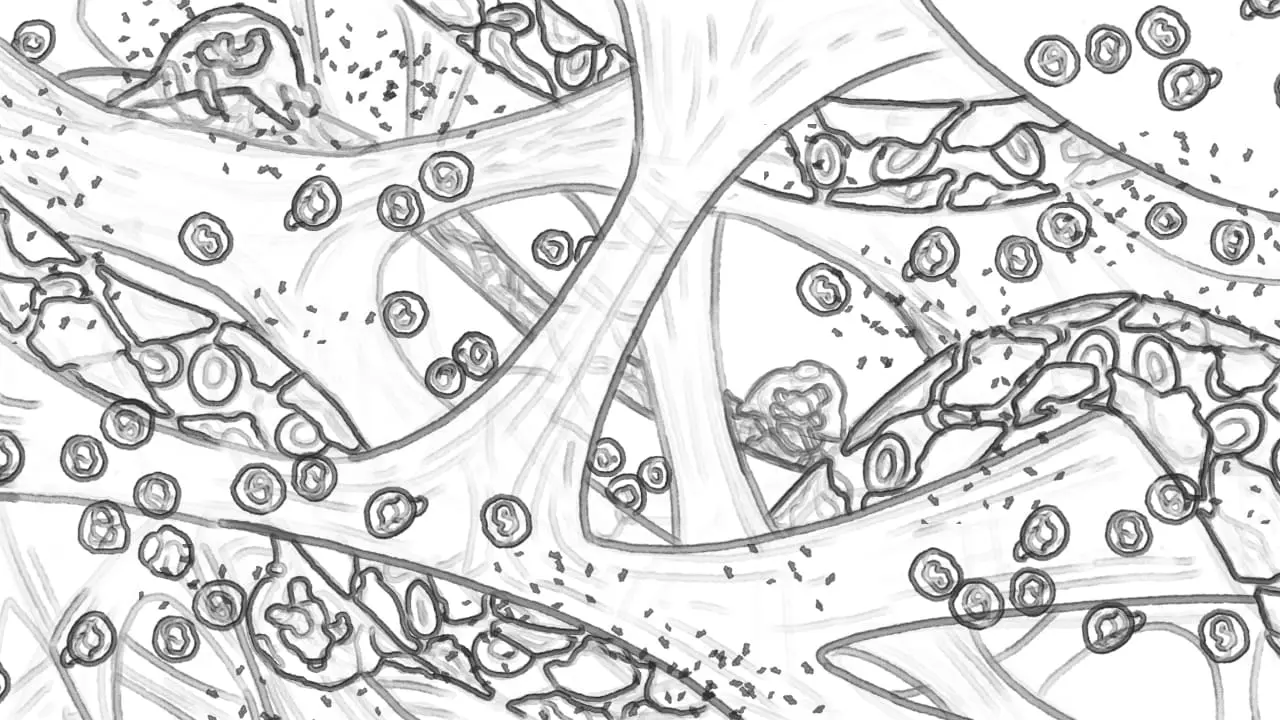
Medical animation has fundamentally transformed the way we perceive and understand complex scientific and medical concepts.
By translating intricate data into vivid, comprehensible visuals, medical animation serves as a critical tool across various domains, including medical education, patient communication, and pharmaceutical marketing. The creation of these animations is a detailed process involving research, collaboration, and sophisticated technology, each step ensuring that animation effectively conveys its intended message.
The process of creating medical animation begins with thorough research and concept development. This initial phase is crucial for ensuring that the animation will be both accurate and educationally effective. Medical professionals collaborate with animators to translate complex medical information into visual formats. This partnership is essential, helping bridge the gap between detailed scientific data and engaging visual representations.

Following research, the project progresses to pre-production, where storyboarding and scriptwriting are key. Storyboarding involves outlining the sequence of animations, crucial for organizing content and ensuring a logical flow. Scriptwriting complements this by providing a narrative that guides the medical animation, aligning the visuals with educational objectives and ensuring clarity.


During production, advanced software is used to bring the storyboard and script to life. Tools such as Autodesk Maya, Blender, and Cinema 4D are employed to create detailed 3D models and animations. This stage is where medical animation truly comes to life, as animators produce realistic and dynamic visual representations of biological processes and medical phenomena. High-quality software allows for precise details that effectively convey complex concepts in medical animation.

Post-production involves refining the 3D animation through sound design, voice-over work, and editing. Sound design adds auditory elements that enhance the viewer’s experience, including effects and background music that complement the visual content. Voice-over narration helps guide viewers through the medical animation, clarifying key points and ensuring the animation serves its educational purpose. Editing ensures a seamless, professional final product, integrating all elements into a cohesive and engaging tool.

Medical animation has a wide range of applications. In medical education and training, 3D medical animation serves as a dynamic teaching aid, helping students visualize and understand complex physiological processes and medical procedures. For patient education, animation simplifies explanations of diagnoses, treatments, and surgical procedures, making it easier for patients to understand their health conditions and treatment options. In pharmaceutical and medical device marketing, animation demonstrates the mechanisms and benefits of new products, enhancing their marketing appeal with compelling visuals. Additionally, in medical research, medical animation facilitates the presentation of data and findings, making complex scientific discoveries more accessible to both experts and the general public.

However, creating medical animation is not without its challenges. Ensuring ethical accuracy is crucial; medical animation must present information truthfully and without sensationalism. Technical complexities also pose challenges, as animators must balance scientific precision with engaging visuals. The process demands a high level of expertise and collaboration to produce effective medical animation.
“Looking ahead, the future of medical animation is promising. Advances in virtual reality (VR) and augmented reality (AR) technologies are set to provide even more immersive and interactive experiences in 3D animation."
Notable medical animation studios have made significant strides in advancing this field with their innovative projects. Studios, (MadMicrobe included) are known for creating highly detailed and engaging medical animations that have been used across various applications. For instance, medical animation studios have produced animations that effectively illustrate intricate biological processes and mechanisms, enhancing educational materials and scientific publications. Their work often involves collaborations with healthcare organizations to develop animations that clarify complex medical information and support both patient education and research. These contributions highlight the transformative impact of 3D animation in visualizing and communicating scientific concepts.

Looking ahead, the future of medical animation is promising. Advances in virtual reality (VR) and augmented reality (AR) technologies are set to provide even more immersive and interactive experiences in 3D animation. These innovations are likely to expand the applications of medical animation, including its use in telemedicine and remote healthcare, making it an increasingly integral tool in the medical field.

Medical animation is a powerful and evolving field that plays a crucial role in making complex scientific concepts accessible and engaging. As technology advances, the potential for medical animation studios to enhance education, communication, and research continues to grow. Exploring this field reveals its current applications and future possibilities, underscoring its importance in bridging the gap between science and understanding.

Healthcare professionals are encouraged to explore the benefits of medical animation in their practices. By leveraging the expertise of leading studios, professionals can enhance patient communication, improve treatment adherence, and contribute to better health outcomes through engaging and cinematic medical animations.
Contact Vincent Elsey [email protected] (Europe) or [email protected] (USA), and they will help get you on the path to producing that engaging and cinematic MOA ASAP.


